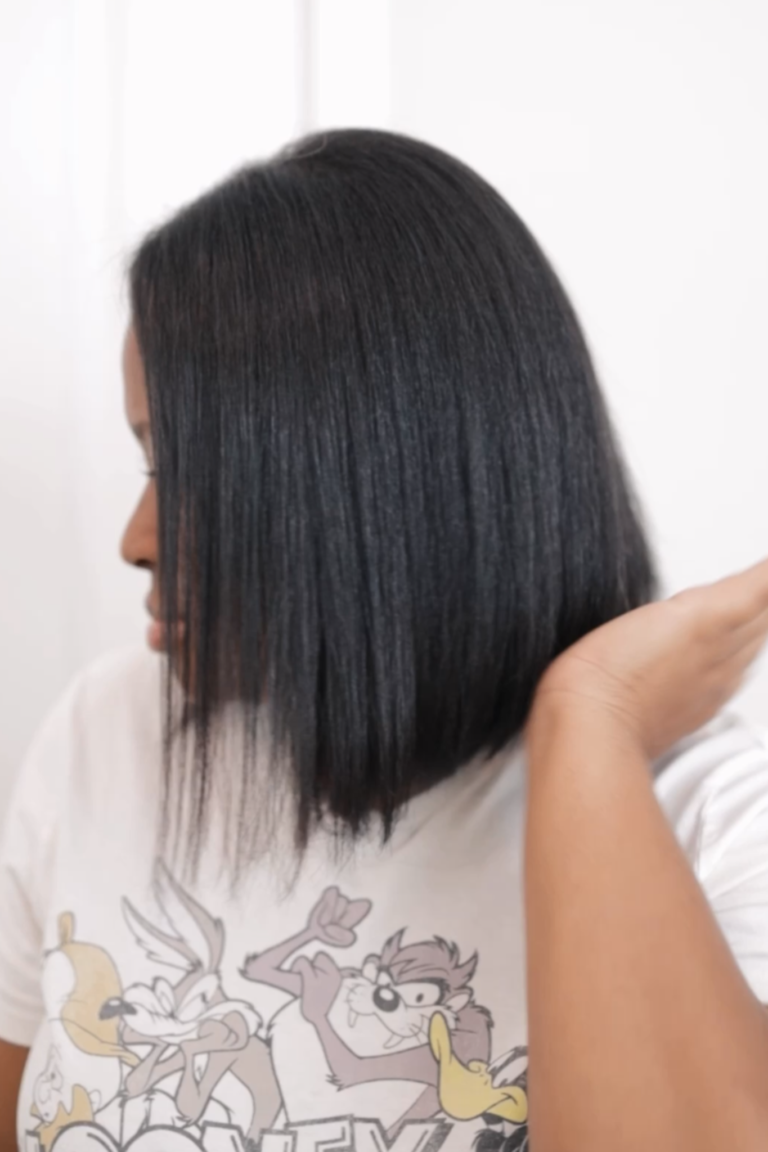
Still Breaking Out at 40? Here’s What Finally Helped Clear My Skin
I’m 45, and I was still dealing with breakouts, hyperpigmentation, and skin texture that I couldn’t seem to get under control. I wanted glowy skin, yes, but first I wanted the acne under control without always feeling like I needed to cover it up. Here’s the treatment plan my dermatologist gave me, the changes I made along the way, and what finally helped.
So I’m sharing the routine she put me on, the habits that helped, and a few product changes I made along the way. This is my experience with a treatment plan made for my skin. Consult with a licensed dermatologist for a custom routine for you skin.
My skin is not perfect. I still have a ways to go, and there are some aesthetic treatments I would love to get. But my skin is night and day from what it used to be.
Skincare Products for Acne after 40
Visiting a Dermatologist
I’ve had acne nearly all my life. But, now I’m at an age where my hormones are changing too, and I wanted some help getting it under control.
There have been times when my skin looked good because I was working with an esthetician. But that gets pricey. And I just felt like, can I please have clear skin without spending all my money?
That’s what led me to look for a dermatologist. I wanted someone that understood my skin type and what was happening in my body that was contributing too. I found an amazing black dermatologist in my area. It took a while to get an appointment but it was worth the wait. I’ve taken all of my children to her for their skin concerns, too.
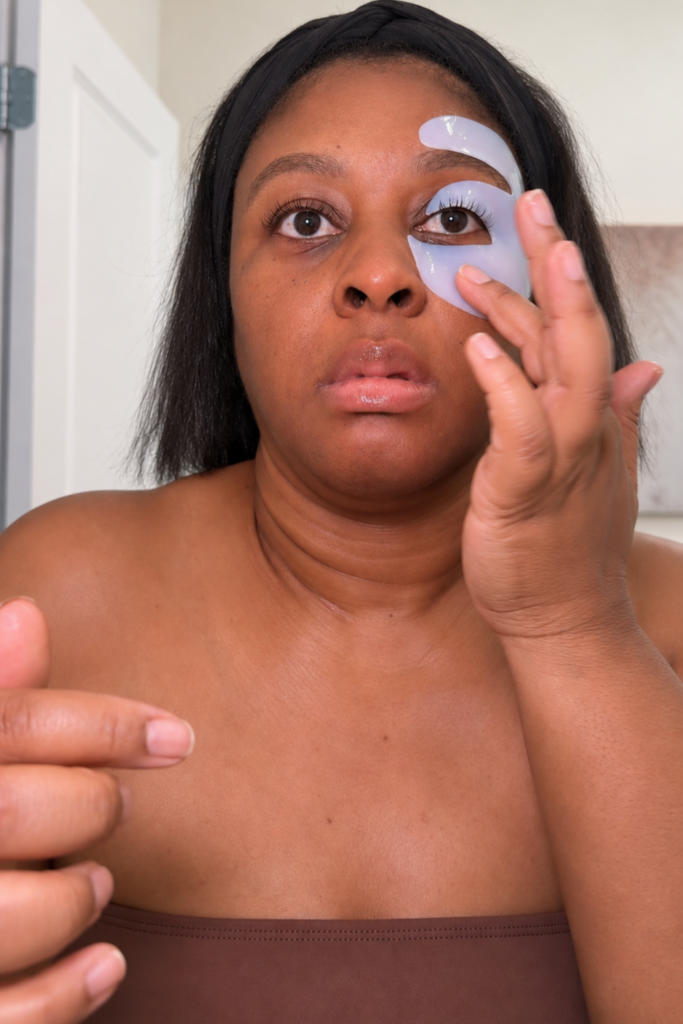
The Habits That Helped Me Get My Skin Under Control
Before I get into the actual products, there were a few things she told me to change. Some of them sound simple, but they really mattered for me.
Double Cleansing
I usually wouldn’t wash my face in the morning. I would just splash some water on it because I felt like cleansing again was drying my skin out, because it was. I was using the wrong cleanser and a moisturizer that wasn’t good enough.
She switched my cleanser and recommended a simple moisturizer. That was the part I was missing. Washing twice a day felt different once I was using something my skin tolerated better.
Cleanse After Sweating
I’m a huge sweater. I can go outside and just be dilly-dallying around on my porch and start sweating.
She recommended gently washing my face after sweating and exercising. That was a big one for me. Obviously, I don’t sit around in sweaty clothes or leave my face sweaty for hours after a workout.
I’m also mindful of how I handle the sweat. I don’t want to keep rubbing my face or wiping it with my hands.
Avoid Physical Exfoliants
She recommended that I stop using physical scrubs on my face. The little beads, the gritty products—all of that.
I was trying to improve texture, but scrubbing harder wasn’t the answer for my skin. My routine already included treatment products, so I didn’t need to keep adding that friction.
Stop Picking at Breakouts
No picking. No squeezing. Just leave them alone.
That’s easier said than done sometimes, but I try to keep my hands off my face and let my treatment do its job.
Using Water Based Foundation
She recommended a lighter, water-based, noncomedogenic foundation. The brands she mentioned to me were NARS, Make Up For Ever, and Lancôme.
Those were starting points for shopping, rather than a guarantee that every foundation from those brands would work for my skin. I still need to check the specific formula.
When I was younger, I would try to cover my acne with makeup. And if I’m being honest, I know I wasn’t always removing it properly.
I was trying to make progress with my skin while not paying enough attention to what I was putting on it or how I was taking it off.
Cleaning my makeup brushes and sponges regularly became part of this, too. I don’t want to keep putting a dirty sponge or brush back on my face.
Apply Sunscreen Daily
Sunscreen, sunscreen, sunscreen. Okay?
I live in Florida. This is essential for me, especially when I’m working on dark spots and using treatment products.
Reapplying when I’m outside matters, too. My dermatologist recommended the e.l.f. Skin Suntouchable SPF 45 Spray an option that would make reapplication easier during the day.
She also discussed adjusting my actives around prolonged sun exposure. That’s something I would confirm with her for each product, especially a prescription. Simply skipping an active for a couple of days doesn’t replace sunscreen, shade, or protective clothing.
Consistency
This is where it all changed. I would expect overnight results when trying new routines. But this time was different. I decided to try it for 30 days without missing. I started to see results within 2 weeks. After 30 days I was committed to the process.
My Morning Skincare Routine
These are the steps I do every morning in my skincare routine. It’s simple but it works.
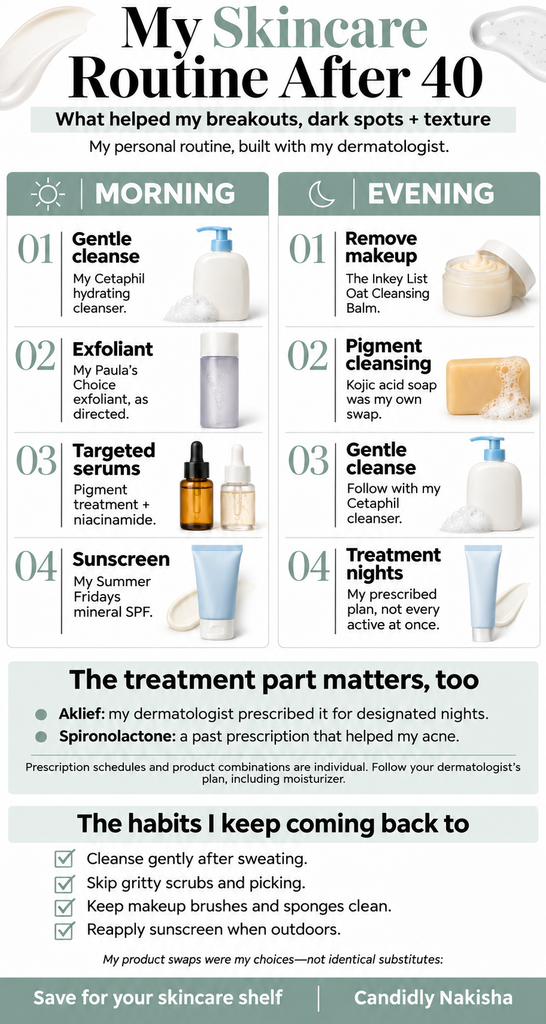
Step 1: Cleanse with Hydrating Cleanser
This cleanser was a game changer for me.
Before this, I was using a salicylic acid cleanser because I thought, I’m acne-prone, so let me wash my face with something for acne.
But my dermatologist put me on a hydrating cleanser instead. My skin could feel oily and still feel dried out. I hadn’t really understood that before.
Switching to the Cetaphil cleanser helped everything feel calmer. I wasn’t trying to get that really stripped, tight feeling anymore.
Step 2: Tone & Exfoliate
Next was my Paula’s Choice exfoliant. This is the step I feel helped with the texture of my skin.
I’ve used it for a while, and the texture has changed dramatically. It wasn’t something I noticed from one application. Looking back at where I started, though, I can see the difference.
Step 3: Apply Pigment Treatment
My dermatologist recommended a PCA Skin Pigment Get Pro alongside my niacinamide serum. I was using the Paula’s Choice niacinamide serum.
Now, let me talk about the pigment gel. That product was expensive, okay? And I had trouble finding it in stock.
I eventually found an Urban Skin Rx product that I chose as an alternative. I was comparing ingredients and looking for something that made sense for my budget and that I could actually get.
That was a change I made myself. I’m calling it my alternative rather than saying it’s an identical formula or that my dermatologist prescribed the replacement.
Step 4: Finish With Sunscreen
I use my Summer Fridays mineral sunscreen, and I love the way it sits on my face. I like how it feels, which makes it easier for me to keep wearing it.
I work from home, so that’s the one I often reach for during my regular day. Sometimes I choose a chemical sunscreen when I go out, based on the formula and how it wears.
That’s my preference, rather than mineral sunscreen being only for indoors. Either mineral or chemical sunscreen can work outdoors when it offers appropriate protection and is applied and reapplied properly.
The Prescription That Made a Big Difference for My Acne
Along with my skincare routine, my dermatologist prescribed spironolactone. My prescription was 50 milligrams once a day with food.
For me, this was huge. I felt like the breakouts and oiliness finally started calming down. My skin hasn’t been the same since.
Sometimes you can be trying all of these products and still need to see someone who can help you figure out what’s happening. Going to a dermatologist opened up an option I didn’t have from just shopping the skincare aisle.
I haven’t taken spironolactone for months now, and my skin has stayed much clearer while I’ve continued my skincare routine. That’s my experience, rather than a promise that someone else can stop a prescription and have the same result. Medication changes are something to discuss with the prescriber.
My Evening Skincare Routine
Step 1: Remove Makeup
At night, I start by taking off my makeup if I wore any that day.
I use The Inkey List Oat Cleansing Balm. It’s really, really thick, and I work it over my face to remove my makeup before rinsing it away.
This is where I take my time getting everything off instead of assuming my makeup is gone after one quick wash.
Step 2: Cleanse with Even Tone Soap
My dermatologist originally recommended the PCA Skin Pigment Bar. The instruction she gave me was to lather it, apply the lather to my face, let it sit for about a minute like a mask, and then rinse it off.
Again, that product was expensive and hard for me to get. I tried an Urban Skin Rx bar as an alternative, but I ended up sending that one back.
Then I found a kojic acid soap that I chose to use instead.
When I say I feel like this was the thing that really took my complexion to another level, I mean it. I absolutely love it. I feel like this gave me my complexion back.
I was using a whole routine at the time, so I can’t separate out exactly how much of the improvement came from that one product. But it’s one of the changes I personally felt made a noticeable difference in the appearance of my dark spots.
This soap was my substitution, not the original product my dermatologist recommended. I also don’t assume her one-minute instructions for the PCA bar apply to every other soap. Kojic acid products can be drying or irritating, so the specific formula and directions matter.
Step 3: Cleanse with Hydrating Cleanser
After that, I go in with my Cetaphil hydrating foaming cleanser.
I like the way this cleanser feels on my skin, especially compared with the stronger cleansers I used to reach for.
I used to think of this as putting the moisture back after the soap. More accurately, it’s another cleansing step, and a hydrating cleanser doesn’t cancel out irritation or replace a leave-on moisturizer.
On makeup days, the balm, soap, and cleanser make this three cleansing steps. I’m sharing what I’ve done, rather than saying everyone needs all three.
Step 4: Apply Pigment Treatment
Next is the pigment treatment—the Urban Skin Rx product I used in place of the PCA Skin gel.
Step 5: Apply Prescription Retinol
My dermatologist prescribed Aklief, a retinoid cream. The active ingredient is trifarotene. It’s a different retinoid from tretinoin.
She had me use a pea-sized amount over my face three nights a week: Monday, Wednesday, and Friday. That was my individual schedule.
I felt like it worked slowly. Honestly, not fast enough for me at first. But skincare takes patience, and my skin is definitely in a different place now than when I started.
This is a prescription step, so the amount, frequency, and other products used alongside it should follow your own dermatologist’s instructions.
My Skin Is Not Perfect but It Is So Much Better
My dermatologist also encouraged me to pay attention to what I was eating, drink my water, and keep my hands off my face.
I try to take care of myself overall, but I don’t want to make it sound like drinking water or eating a certain way replaced my acne treatment. Getting help and following a consistent routine were a big part of this for me.
I still have things I’d like to improve. There are still treatments I’m interested in, and I’m not going to sit here and act like I have perfect skin.
But my God, am I further along than I was before.
I’m not constantly trying to cover the same breakouts. My texture looks different. My complexion looks more like me again.
That’s why I wanted to share this. I’m almost 46, and I’m glad I finally went in and got help instead of continuing to guess at what my skin needed.